

eLearning
Acknowledgements of Country are becoming standard practice across many organisations.
But standard practice doesn’t always mean meaningful practice.
This eLearning is designed to move your people beyond memorised wording and into genuine understanding — building the confidence to approach an Acknowledgement of Country with clarity, respect, and authenticity.
Learners are guided to explore their own connection to Country, reflect on the places they live, work, and move through, and develop a more personal, grounded way of engaging with the practice.

Take a Look
What’s Included
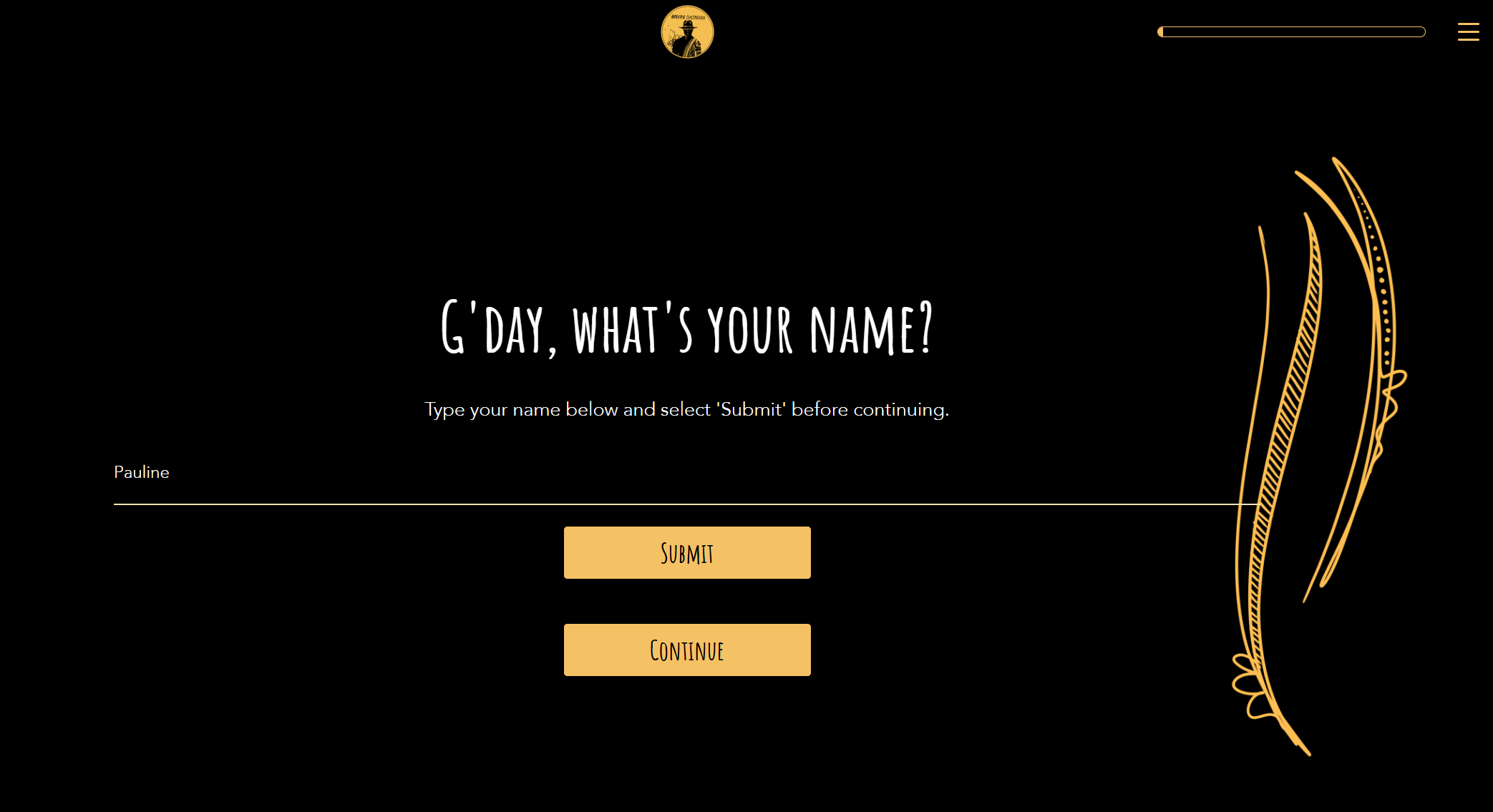
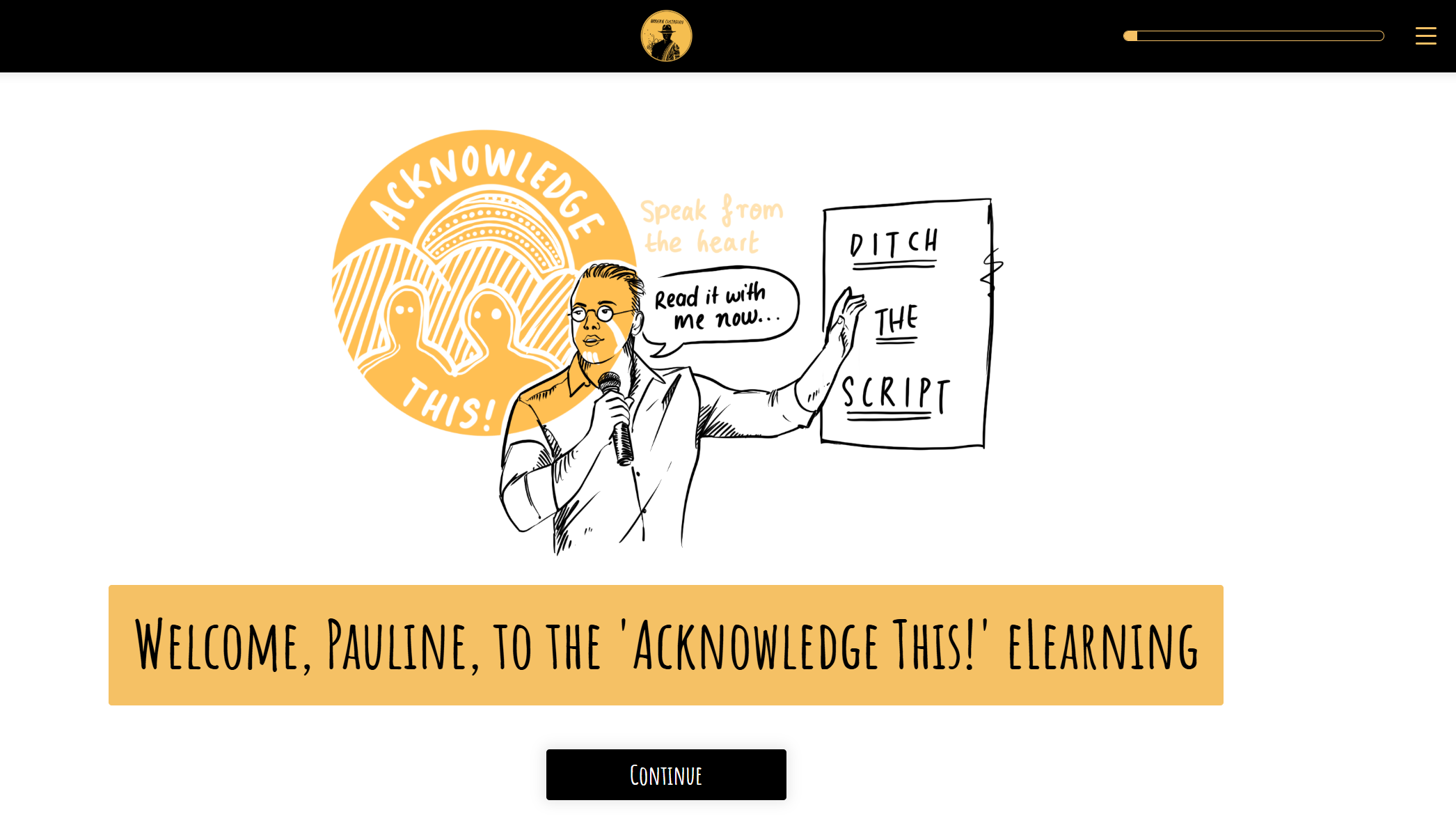
The eLearning is designed as a guided, conversational experience — encouraging curiosity, reflection, and personal connection, not passive consumption.
Built from the most common (and often unspoken) questions raised in Acknowledge This sessions, the content has been shaped through real conversations with over 40,000 participants.
This isn’t static content.
It evolves — with regular updates to ensure it remains relevant, accurate, and grounded in real-world practice.
How It Works
Each section includes:
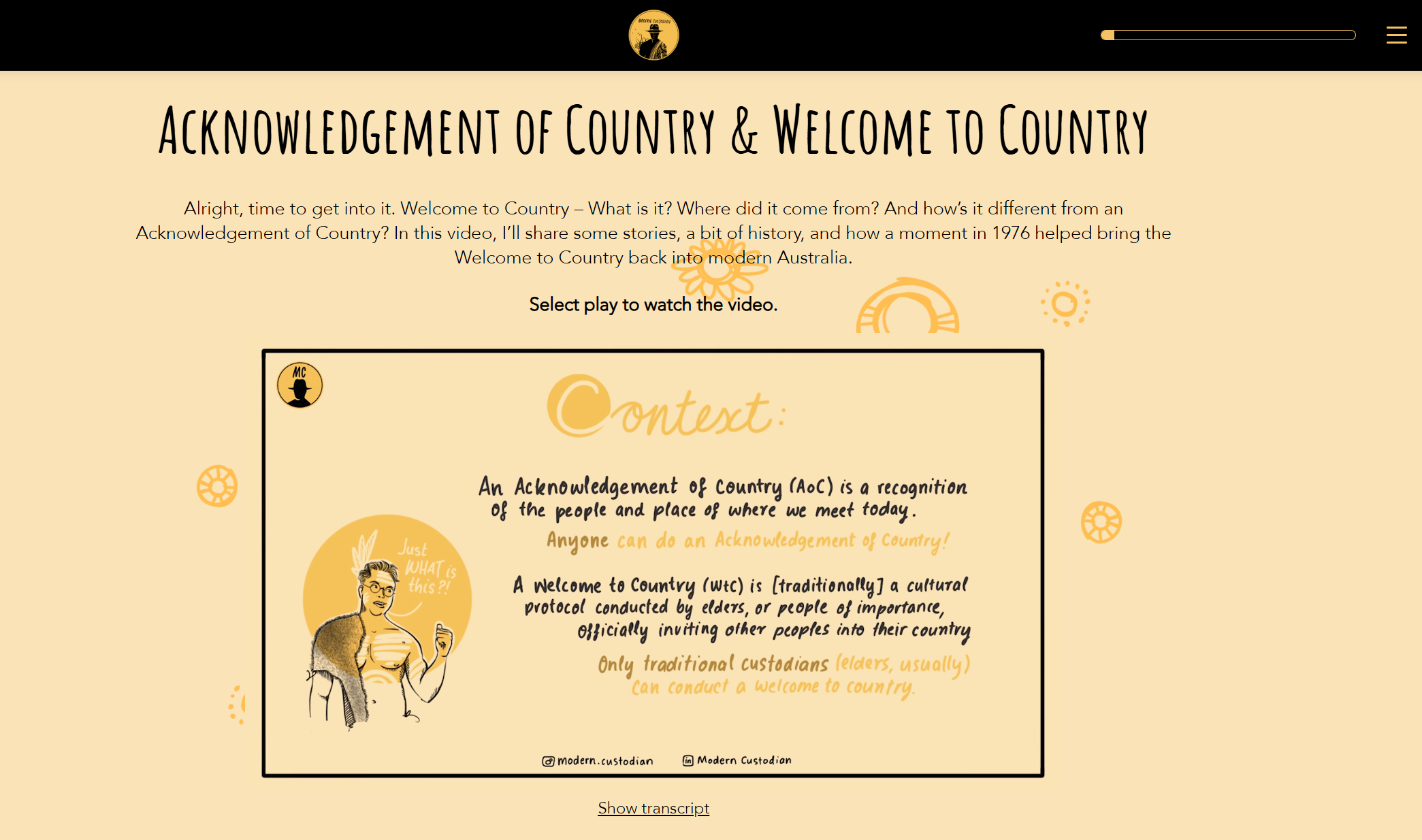
A short video introduction
Clear, practical insights
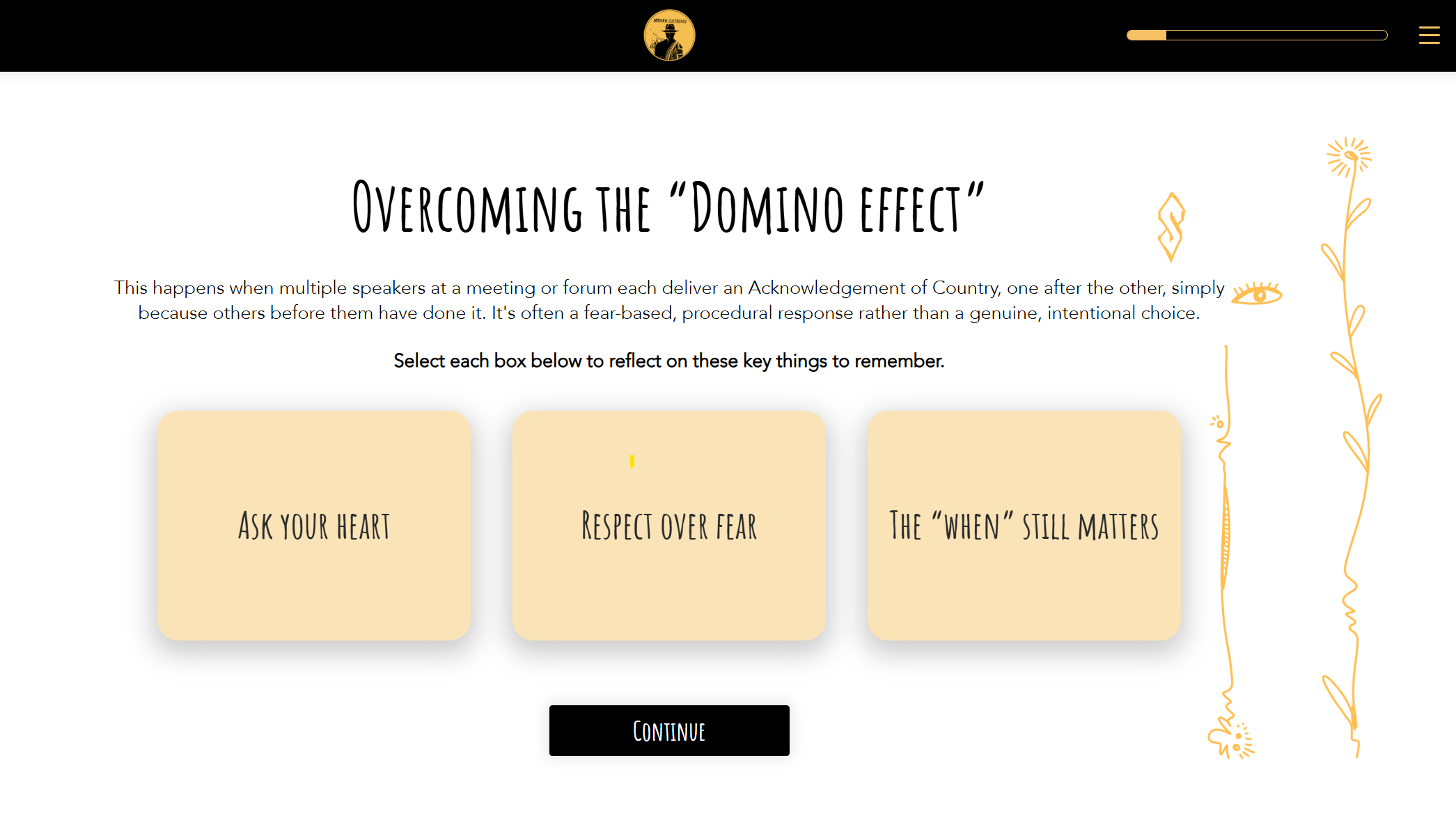
A guided reflection prompt
Designed to move learners from understanding → to personal meaning → to confident application.
Questions Explored
What is the context and history of Acknowledgements and Welcomes to Country?
How do I be authentic?
What if I get it wrong?
When is it appropriate to deliver an Acknowledgement of Country?
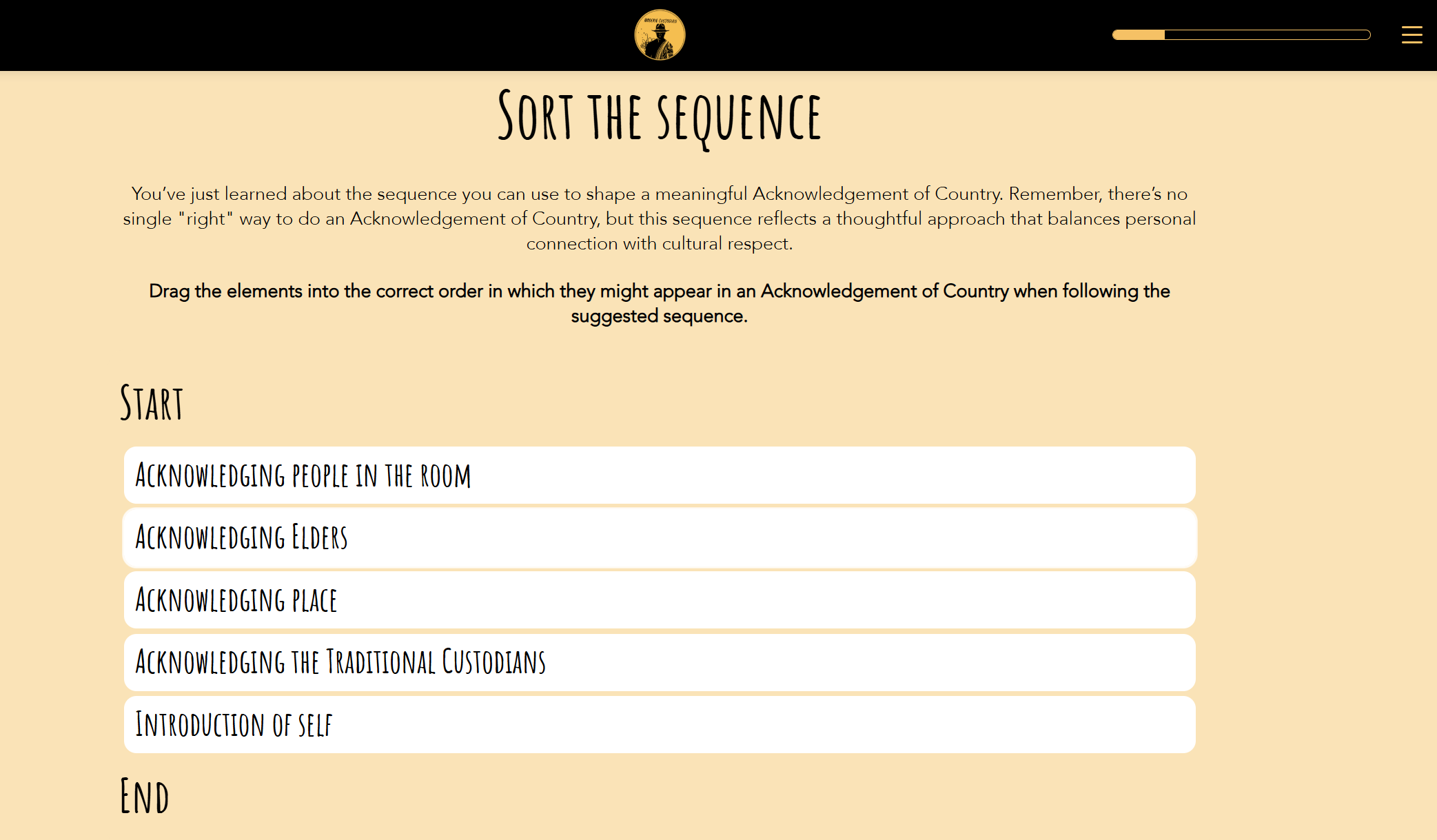
Is there a structure I can follow?
Built for Real-World Use
Participant workbook for notes and reflection
Embedded English captions across all video content
SCORM-compliant module for seamless LMS integration
Developed in collaboration with learning design specialists and aligned to best-practice digital learning standards.
Why this works
Opens with experience, not tech → pulls people in first
Separates flow into sections → easier to scan (buyers skim here)
Keeps your voice intact → “not passive consumption,” “evolves”
Still ticks procurement boxes → SCORM, LMS, captions, etc.
Bridges learning → behaviour → not just “what’s included,” but “what happens”
